Friday, October 31, 2008

Bersarin Quartett: <i>Bersarin Quartett</i> (Lidar CD)


I've been listening to Bersarin Quartett's self-titled debut for a couple months now. At first I was letting it set in, speak to me, move me – it continues to do so in new ways every time i listen to it. In fact, I've been struggling to do this impressive record justice within the confines of a review.

For starters, Bersarin Quartett (sic) is not a quartet at all; it's a single man named Thomas who hails from Munster, Germany. He claims an interest in scoring imaginary films, and it's safe to say that he nails it here. In fact, what is most impressive about this album is that each individual track sounds like an epic on its own. String them all together and it's truly marvelous.

Not only is each track carefully crafted – Thomas has a knack for detail – but it usually has its own deliberate narrative arc. The ordering of tracks here is also quite smart, as nearly every track complements the one before and/or after it. The sound is electronic and downtempo, but lush and layered, relying on samples or digital instruments to give it a more orchestral, cinematic bent. From the opening phrases of "Oktober," it's clear that this is going to be a wonderful journey; the electronic chords (reminiscent of Arovane's Tides or even the more sublime moments of Various Artists) provide a nice contrast to the airy string section behind them, all anchored by a loose downtempo rhythm section.

At other times, there is a tinge of light jazz to these pieces, in mood and arrangement, such as the clarinet flourishes on "Geschnicten Von Interesse" or the buried horn of "Die Dinge Sind Nie So Wie Sie Sind," the latter of which has the most rhythmic flair, evolving into a loose shuffle that lends the lightest atmosphere in the middle of the album. It's a nice break in the clouds compared to the more dramatic, brooding moments such as "Inversion" or "Es Kann Nicht Ewig Winter Sein." The former swells in a scary crescendo halfway through, suddenly stops and then creeps back with another series of gloomy drones, while the latter ebbs with a repetitive bass hook and an understated brush kit, carried with a series of undulating chords and overtones. The same might be said about "Und Die Welt Steht Still," another track that hinges on unresolved tension, a prolonged layer of chords through which occasional melodic hints peek. "St. Petersburg" and closer "Mehr Als Alles Andere" both heighten the tension with percolating percussion that denotes a sense of urgency; the latter finally boils over into vaguely Trentemøller territory (at his most cinematic), with a skittering, distorted downtempo kit, resolving with a delicate melodic coda.

Somehow describing this music in text form just doesn't really do it justice... he really is a master of mood and tension, all working within a more traditional framework of musicality. There are no jarring computer-music sounds here; any electronics serve to reinforce the basic melodic or organic foundation from which he's started. It really is a gorgeous set of tracks that warrants repeat listens, as the details come to the fore a little more each time.

mp3s: Es Kann Nicht Ewig Winter Sein | St. Petersburg
more info: Myspace | Lidar album detail | Discogs
buy it: Lidar site

Tuesday, October 28, 2008

Benoît Pioulard: <i>Temper</i> (Kranky CD/LP/digital)


Benoît Pioulard (the alter-ego of Thomas Meluch) puts forth another release of pastoral, folk-tinged intimacy in the form of Temper, his second album for Kranky. Much like his previous effort Précis, many of the songs herein are quite brief, and the aesthetic tends to bounce between lyrical, dreamy free-folk and more ambient, sublime instrumentals and interludes. Because of the brevity of most of these tracks, Temper is best experienced as a whole rather than as isolated songs or interstitials – sort of the opposite of Max Richter's album I wrote about last week.

I'm of the opinion that despite the distinct inherent difference between the vocal and instrumental tracks, one style could not really exist here without the other; they serve as a healthy complement to one another. Meluch's voice is plain but sweet, working to carry those pieces in which he sings, tempering the more surreal production style (all hazy and dreamlike) with a straightforwardness that's unassuming, at times even a bit disarming. And while at their most basic, the vocal tracks are folk songs, there is enough hiding in the details to subvert any typical assumptions that go along with that tag. Little unexpected things like the accordion on "Idyll" or the thumb piano of "Cycle Disparaissant," the hammer dulcimer of "A Woolgathering Exodus" all serve to liven things up and keep you wondering what's coming next. And not every vocal track is straightforward either; 'Modèle d'Éclat" is a lovely miniature anthem carried by voice and drones, tinkery percussion and rattles skittering under the surface while "Hesperus" has an odd strut to it as the closing song.

One thing I've noticed with Temper is that, for me personally, it comes and goes like a dream – just as soon as I've been submerged in Meluch's strange little musical world, it's suddenly over, and I start it all over again. My lasting impression is vague, sort of like the hazy atmospheres that envelop many of these tracks, but it always has me coming back for more.


mp3s: Ragged Tint | Idyll
more info: Official artist site | Myspace | Kranky | Discogs
buy it: Kranky site (via Brainwashed) | Bent Crayon | Boomkat | Forced Exposure | Amazon MP3 | Emusic | iTunes

Monday, October 27, 2008

&#216;: <i>Oleva</i> (S&#228;hk&#246; Recordings CD/LP/digital)


Even though Sleeparchive gets a lot of acclaim these days for his specific brand of minimal, icy electronics (both on and off the dancefloor), it goes without saying that he owes a lot to Mika Vainio and Pan Sonic. Back in the day when Pan Sonic was still violating trademark law with their original name Panasonic, Mika Vainio and partner-in-crime Ilpo Vaisänen created an ultra-cold, hyper-minimal variation on techno. Their debut Vakio was an indication of where they were coming from as much as where they were going, and ever since they've been further distilling their aesthetic, subtracting more and more, adding back in, but rarely really returning to the more predictable 4-on-the-floor formula that powered Vakio.

Vainio's solo work has worked on two very different fronts. Under his proper name, he released a couple albums of extreme minimalism. Onko on Touch was in the "barely there" category, so quiet at times that one had to jack the volume or check the stereo just to make sure it was still in fact playing. Ø has been more of a playground for him, though... where he seems to more freely indulge his influences as well as his own curiosity for space and form. Older releases like Metri or Atomit had nods to 303 acid, Beltram-esque cold techno, and Detroit warmth, even a tinge of melody occasionally (something I don't think I've ever encountered on a single Pan Sonic release). As years have passed, Ø has grown to share the same severity found on many of Pan Sonic's releases, diminishing the direct references to techno and instead opting for something more removed and detached.

Oleva balances these extremes and does so rather well. There is only the occasional nod to the techno past of the moniker, in more upbeat tracks like "Loihdittu," although in that particular instance, the beat is broken, so it's insistent without the immediate dancefloor connection that a steady kick denotes by default. Vainio frontloads Oleva with the most immediate and rhythmic material, leaving the second half of the album to suspend in deep space. It's a trajectory that will likely seem familiar to anyone who's followed Pan Sonic or Vainio's solo material; start up, get active, slow down, disappear... yet however often he repeats this pattern, there is surprising room to roam within his minimal palette. Diversions away from the more severe end of the spectrum are a welcome bright spot, and his oblique cover of Pink Floyd's "Set the Controls to the Heart of the Sun" is not only refreshingly odd in choice but also quite compelling as its own piece of instrumental mood music. Unlike the more bombastic moments of recent Pan Sonic efforts like Katodivaihe, most of the tracks here are crystal clear and even have a bit of a twinkle to them, like light refracting and bouncing around a dark room. The sounds are all clean and distinct mostly. This is the case even on the more movement-oriented tracks like "S-Bahn" or the aforementioned "Loihdittu," wherein, despite their more busy nature, everything seems quite distinct and deliberate. On the more atmospheric end, Vainio branches out of electronics for a moment with the startlingly organic "Tasanko," which features plucked strings and bending strums, decaying in its surrounding space. Vainio seems to have an affinity for an oddly dry space -- it sounds equally deep and sterile, vacuous but somewhat claustrophobic. This is most apparent on "Mojave" and "Kaussaliton," the latter of which devolves into the tiniest high frequencies and zips of sound. By the time closing track "Muistetun Palaava Taajuus" rolls around, it's easy to forget that there were some rather spry moments in the earlier part of this album – the dread that fills the air with this more elastic ambience overwhelms any of the action that preceded it in the first half of Oleva.

While Oleva doesn't really break new ground for Vainio, who increasingly strikes me as an "I know what I like and I like it" sort of auteur, it is another compelling entry into his repertoire, channeling his previous efforts and the sounds that comprised them but in some new and interesting ways.

mp3s: Set the Controls to the Heart of the Sun | Tasanko
more info: Discogs | PhinnWeb Profile | Sähkö Recordings
buy it: Sähkö download | Boomkat | Bent Crayon | Forced Exposure

Saturday, October 25, 2008

Paavoharju: <i>Laula Laakson Kukista</i> (Fonal CD/digital)


Will you get it? It's not so much a question for you, listener-to-be, as it is a question I ask myself every time I replay this bizarre album from this group of Finns. The songs and pieces that comprise Laula don't function in tandem so much as an album as a series of unexpected detours and diversions. Within the first few songs, the group swerves from textural ambience to off-kilter electronic pop, into a dusty piano chanson and then into straight-laced Finnish folk music. Chances are even the most seasoned fan of eclectic music will be scratching his/her head while listening to this album for the first time.

I guess the real question is, despite its weirdness or unpredictability, is the music worthwhile? I noticed several reviews pop up in recent months that laid acclaim to the group's talents, and I have to concur that it's a thoroughly interesting listen. There are a few moments that test my patience, but overall there is a certain joy in the sheer variety on display here. Although there is a revolving cast of characters in the wings, brothers Lauri & Olli Ainala lead the way mostly, crafting both traditional songs with proper vocals (sung in Finnish) as well as various instrumental vignettes and motifs. There is a certain flare for old-fashionedness that ties it all together, even as the individual tracks vary considerably in style and arrangement... there is also a certain otherworldly mystique to these pieces, as though regardless of what sounds they're exploring, it's all passed through an enchanted forest before reaching your ears. "Kevätrumpu" is a red herring as the first proper song on the album, featuring an airy female vocal and a rousing, almost dancefloor backing track, like Múm overtook a discotheque for a night, all shake and sparkle. In immediate contrast to that are the stark folk-tinged waltz of "Italialaisella Laivalla" and the troubador anthem of "Uskallan," which swells with pomp and circumstance. The latter is one of the more compelling songs because it seems to synergize their ideas the most completely, combining electronics, traditional instruments, both male and female vocals, proper lyrics and a weird, old-meets-new tone. "Kirkonväki" sounds like some odd cast-off from an old film, another bobbing waltz that looms forth with organ, stiff drums and another fluttering female vocal.

Much of the rest of Laula Laakson Kukista is less direct... the duo focuses more on mood and less on traditional songwriting so to speak, but it is not filler. It all adds up to further that vaguely antiquated sound, something that sounds old but still feels new in its oddness and deliberate juxtaposition. The reverberated crow calls of "Sumuvirsi," the dusty music box melodies of "Pimeänkarkelo," the dizzy chamber piano of "Alania," the slightly dub-tinged downtempo of "Ursulan Uni"... all of these at first seem incongruous, but they are part of the larger, mysterious (at times downright confusing) impression of Paavoharju.

So do I get it? Maybe not... the words as I've written them here feel vague even to me as I struggle to describe the impression that Paavoharju imparts. I can't put it on unconditionally at any random time of the day, but it does have its place... that warm crackle of vinyl and old tape that permeates this album feels awfully cozy late at night.


mp3s: Uskallan | Ursulan Uni
more info: Official artist site | Myspace | Fonal Records
buy it: Fonal Shop | Bent Crayon (CD) | Boomkat (mp3) | Amazon mp3

Friday, October 24, 2008

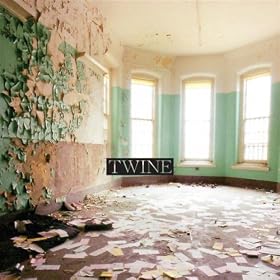
Twine: <i>Violets</I> (Ghostly International CD/LP/digital)


I should come clean first by acknowledging that Twine and I go way back. I've known both Greg Malcolm and Chad Mossholder since their days in Kent, Ohio, where I went to college. While my friendship with the duo might temper my opinion more than a little, I can honestly say that after 10 years of following their musical endeavors, Violets is the impressive culmination of their progress so far. Their earliest work wandered somewhere between IDM abstraction and dark, clinical drum & bass, somewhat a sign of the times while still putting forth their own twist on contemporary trends, sometimes dodging them altogether. In fact, avoiding trends is really how they set forth from that early point on, veering further and further off the beaten path of en vogue electronic music to incorporate disembodied voices, snippets of found sound, conversations, melancholy guitar work, vague references to post-rock and film scores, tape music and more. By the time they released the overlooked Circulation LP in 2000 on the tiny Swedish label Komplott, they'd virtually abandoned any relationship with genre and begun to pursue their own amalgamation of ideas and reference points, at times bewildering, alarming or chilling.

And so here they are, after a long and winding road, with their fifth album. Those familiar with their self-titled fourth album in 2003 (their first for Ghostly) will no doubt recognize some of the palette the pair have brought to Violets, a disorienting blend of atmospheres, electronics, textures and guitar work. The guitar is largely the focal point of this album, which shifts away from the more obvious programming and rhythm of Twine and transports it into a slightly different sound. But what these tracks do have in common with the group's last effort is the ability to scratch the surface, go underneath to the dark side. In fact, that has been what I would consider a running theme over all their records, irrespective of the arrangements within, tapping into a certain malaise within each of us. Conversations picked up on a phone scanner which may have ordinarily seemed trite or mundane suddenly take on an air of paranoia, like the futility of it all has been exposed within a bleaker, bigger picture.

The closest resemblances to Twine's last album are perhaps "Disconnected" and "Halo." "Halo" is the most overtly electronic sounding of the lot, with a pronounced, clipped staticky drum pattern; underneath reside off-kilter guitar strings and bottomless ambience. At first the plodding rhythm section of "Disconnected," all stop and start, and its accompanying stark guitar melody seem nearly incongruous, but it all falls in line about halfway through the track. This piece has the most clear sense of contrast, the lonely guitar up against a wall of erratic beats. If that's where they've already been, where are they going with the other material? Further in that direction, where the electronics become less obvious, and the distinction between what's electric vs. acoustic, sampled vs. played, natural vs. manipulated becomes more vague. The title track is a gloomy dirge, a series of drones, repetitive basslines and grimy guitar haze. Unnaturally prolonged tones and voices stretch overhead, most obviously in the surreal, distorted protest voices heard halfway through the track (sampled from an anti-Bush rally). Adding to the malaise, an urgent honking horn blows by in slow-motion – taken at face value, it's just another sound, but somehow it seems to point at our troubled times. At other times, the voices are less abstracted: the duo has always had a knack for uneasy voyeurism in its use of scanned conversations, and inasmuch the northern accent that introduces "Longsided" is transformed from what probably is just a mundane yokel conversation into something unsettling, especially when juxtaposed against a percolating rummage of beats and microtonal drones. The frantic girl who argues with her relative on "In Through The Devices" is genuinely anxious, crying over a boyfriend wanted by the law, over a weird, bending guitar pattern.

The most musically graceful moments occur in "Endormie," an extended track again built largely around a lilting guitar phrase and a sweet guest vocal from Alison Shaw of the Cranes. It has the most traditional narrative arc as far as songwriting goes, but does no disservice to the tension found elsewhere here; it is a glimmer of light in the darkness. "Lightrain" buzzes with electricity (literally) and drones, and midway is interrupted by a series of voicemail recordings; they begin clearly but soon disintegrate into Hafler Trio-esque nonsense, another ingredient in the kettle. That the album is bookended with short, lighter fare is a smart choice; the darkness in the center of this album is tempered by a bit of hope and back-handed optimism.

Violets demands a fair amount of attention and will draw you in below the surface before it fully resonates... the voices that speak to one another, occasionally to you directly, are only the surface; there is a lot to chew on here. What began for me as a curiosity has become a mild obsession; the obvious enthusiasm for detail that Twine relish is rubbing off on me, pulling me under, making this one of my favorite albums of 2008.


mp3: In Through The Devices | Lightrain
more info: Official artist site | Myspace | Ghostly artist profile
buy it: Ghostly Download Shop (all 3 Twine releases) | Amazon mp3 | Emusic | iTunes

Thursday, October 23, 2008

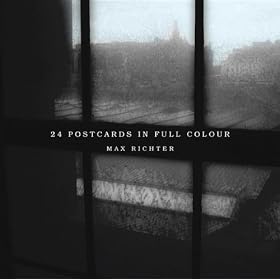
Max Richter: <i>24 Postcards In Full Colour</i> (Fatcat CD/LP/digital)


English composer Max Richter returns to Fatcat for a fourth album of instrumental beauties. 24 Postcards veers off the path from its predecessors, however, in its format and concept. Richter's original intent was for each of these to be a ringtone. On his microsite dedicated to the project, he asks the question, "Who says that ring tones have to be so bad?" He wanted to create a series of vignettes to be used by people as they pleased on their phones, as a way to test the waters so to speak for ringtones as a viable music performance platform. He even goes so far as to point toward potential live space performances where the audience's phones will essentially perform the music, and Richter himself would be the "conductor" or enabler by texting or calling the audience to prompt the music. It all gets a bit grand, especially considering how miniature these pieces of music are... so what then of the music itself?

Some of Richter's previous efforts were grand in their own purely musical right, deceiving in what at first seemed overly simplistic music that would often undulate and build with a certain amount of stealth into something more aspirational and far-reaching. The 24 short ringtone pieces collected here share the same approximate tone of voice of his previous work, each one crafted for electronics, strings and piano to varying degrees. Each one cloys with a bit of yearning, that sort of earnest melancholy that Richter is so good at. Because they are so bite-sized, they often feel like intimate moments, snapshots into a specific spot within someone's emotional train of thought. They all work well together, and although Richter obviously intended these more as one-offs rather than a proper album, it flows quite well in the ordering he's compiled here. Some of the pieces are stark and wistful ("This Picture Of Us. P.," "A Sudden Manhattan of the Mind") while others are more oblique and textural ("Cathodes," "The Road Is A Grey Tape," "Tokyo Riddle Song"). They are also at different turns sweet & romantic ("Lullaby From The Westcoast Sleepers," "The Tartu Piano," "Berlin By Overnight") or nostalgic and slightly more ephemeral ("In Louisville At 7," "A Song For H / Far Away").

I'm not sure why I find these little overtures to be so compelling. Perhaps I can't help but envision my own postcards to accompany them (the microsite's own interactive interface notwithstanding), or even take it a step further and imagine what particular moment in a character's life Richter is scoring. Many of these small pieces bring a large gravity with them, and that something that is essentially an experiment in brevity is able to conjure up imagery or emotions on such an oversized scale is a testament to Richter's panache for moving his audience.


mp3s: H In New England | A Sudden Manhattan Of The Mind | Kierling/Doubt
more info: Official artist site | 24 Postcards project microsite | Fatcat album detail
buy it: Fatcat shop | Boomkat | Bent Crayon | Forced Exposure | Amazon mp3 | iTunes | Emusic

Wednesday, October 22, 2008

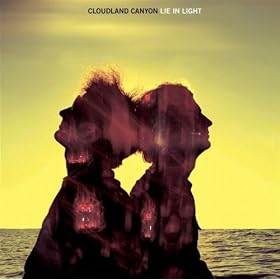
Cloudland Canyon: <i>Lie In Light</i> (Kranky CD/LP/digital)


The first time I really heard Cloudland Canyon, it was their previous EP, Silver Tongued Sisyphus. That EP was split in half, with the first leaning more toward sprawling, instrumental psychedelia and the second falling more in line with krautrock. I had assumed that the group would follow the more abstract side of their sound on their next album rather than the more traditional vocal/song structure. It turns out I was half-right.

Lie In Light is not a long album; just under 40 minutes long, it goes by rather quickly, but it suits the sort of narrative arc of their sound here well. They completely confounded my expectations with the opening track, "Krautwerk," which is full-on motorik Neu! krautrock at its finest. It chugs at a steady tempo for the duration before giving way to another vocal track, "White Woman," which glides on a hazy wall of guitar and drones. Much of the reverb-heavy vocals and layered drones recall old psych records (or even the most discordant, more improvisational moments of early Velvet Underground), which reinforces the sort of "other" quality Cloudland Canyon's music seems to have. "You & I" is even more immediate with a chugging, pulsing electronic rhythm section and a shimmering, radiant series of drones and chords that propel the track, but its final moments are more indicative of where the rest of the album is in fact heading; most of the more song-oriented arrangement falls away and a series of bending, wavering drones. This aesthetic carries through the next few tracks with the exception of the krautrock reprise in the latter half of "Heme," again with a certain 60s psych quality due to the sound and style of their vocals. "Mothlight Part 1" is perhaps the perfect closing track, opting out of the dense fog of the previous few tracks with a lovely, short pop song carried by the refrain, "Sometimes it's hard to go home again," a simple sentiment that is almost at odds with the ambiguity of the German lyrics found elsewhere on the album (at least for a non-German speaker like myself).

If Silver Tongued Sisyphus seemed like two disparate halves, Lie In Light seems to indicate that it was really just two sides of the same coin.
Members Kip Uhlhorn & Simon Wojan are able to rise up to the challenge of writing proper songs within the paradigm of their psychedelic storm, but they are just as comfortable submitting to their most basic impulses to let it all flow, often abandoning much of a structure at all and instead letting the music glide where it pleases. They manage to do a lot in 39 minutes, and my hat is off to their ability to ride the line so well, delivering upon expectations while still surprising.


mp3s: You & I | Lie In Light
more info: Official artist site | Myspace | Discogs
buy it: Kranky shop (hosted by Brainwashed) | Bent Crayon | Emusic | Boomkat | Amazon | iTunes

Tuesday, October 21, 2008

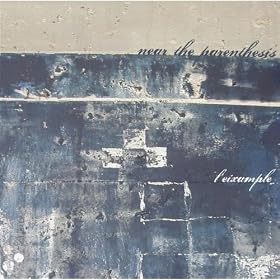
Near The Parenthesis: <i>L'Eixample</i> (n5MD CD/digital)


There was a wave of so-called "IDM" that rushed in like a tsunami in the late 90s and early 00s that mined heavily from the sounds pioneered by Autechre with their mid-period albums Tri Repetae and Chiastic Slide; while a lot of young producers drew inspiration from those melancholy, non-dancefloor sounds, Autechre moved further and further into abstraction with a series of albums that sounded at times like they were generated by an algorithm, sometimes alienating the fans that had fallen in love with their more obvious and emotive records. Labels like Neo Ouija and City Centre Offices carved a niche for themselves with a series of introspective, instrumental electronic albums from a range of producers all working in tandem within a sort of IDM zeitgeist. I speak for myself and perhaps others as well when I say that the initial fascination with these sounds waned in the mid-00s, emphasized by labels like Morr Music altogether shifting focus toward a vague shoegazer revival, Planet µ switching gears into a dubstep authority, and Autechre continuing to shapeshift in new ways that confound categorization.

San Francisco-based producer Tim Arndt's third release as Near The Parenthesis is my first exposure to his music... I stumbled onto it by chance and am glad that I did. At the risk of sounding generalist, one might say that the music of Near The Parenthesis subscribes to the post-Autechre school of electronic listening. However, I'd venture that it's something slightly beyond that... That is to say that I suspect he's been influenced possibly by those seminal sounds as well as what's come beyond it. But as I write this, I think perhaps this all sounds a bit presumptuous or condescending, as it takes a lot away from Arndt's own musical talents, which should not be underestimated — IDM, post-Autechre or whatever you want to call it, L'Eixample is an achingly beautiful album.

Many of the nine tracks found on L'Eixample ebb and flow with a ponderous grace, with an emphasis on an understated melancholy and lushness that complement its textures, arrangements and melodic sensibility. It is in this shimmering warmth that L'Eixample shakes away many of the immediate comparisons to artists like Arovane or Autechre; many of the more angular or mechanical sounds to be found in those artists' work are completely absent here, or at least dialed down considerably. There is more in common with Cliff Martinez's Solaris score than anything on City Centre Offices; Arndt flaunts a similar knack for repetition and cyclical patterns that are at alternate times hypnotic, moving or insistent. Because of this, the tracks heard on L'Eixample don't feel overly distinct to me but parts of a whole, and this is why it succeeds as an album. While sometimes that homogenous quality can undermine an album, here it strengthens it. There are still some truly gorgeous specific moments on here: the opening melodic phrases of "Guell" are equally gloomy and lovely, while the closing sequence of "A Brief Walk In The Sea" is triumphant in its elegance. The disembodied voices underneath "Empty Square" and "Departing Gate" might make you turn your head a bit just to make sure it's on the album and not somewhere else in the distance; the latter also is built around a nice piano arrangement that builds over its five minutes into a layered beauty.

L'Eixample is a really nice piece of work that comes highly recommended for any fan of emotive, instrumental electronic music. For this listener, it's helped revive an interest in IDM and electronic listening music, proving that you don't need to reinvent the wheel to create something inspiring and moving.

mp3s: Guell | Departing Gate
more info: Official artist site | Myspace | n5MD artist profile
buy it: n5MD download shop | Emusic | Boomkat | Amazon | iTunes

Monday, October 20, 2008

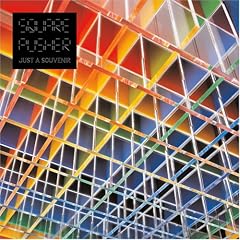
Squarepusher: <i>Just A Souvenir</i> (Warp CD/LP/digital)


Tom Jenkinson has always been somewhat of an enfant terrible when it comes to his specific brand of electronic music. He made a splash in the mid 90s riding the initial fascination with broken beat electronic jazz. Hisformer roommates Richard D. James (Aphex Twin) and Mike Paradinas (µ-Ziq) were sort of partners in crime, each of them playing with frantic drum patterns, sometimes shrill sounds and often twee melodic sensibilities. Jenkinson always was keen to incorporate his masterful electric bass and a much more jazz-oriented approach to composition, even in his most chaotic electronic moments. But after a few albums of that sound, he made some weird left turns; Music Is Rotted One Note boasted no electronic programming whatsoever, sounding more akin to late 60s fusion jazz than anything on the Warp roster at the time, and the series of EPs that followed seemed to find Jenkinson searching for something new without necessarily striking gold. In the years prior to this release, he seems to have become more comfortable in his own strengths as well as unafraid to confront his weaknesses, albeit more obliquely at times. Hello Everything in 2006 was a welcome burst of joy that seemed to finally embrace his technical skill, jazz-like improvisation, sense of humor and knack for melody full-on.

Just a Souvenir is yet another surprise, however. Certainly Jenkinson can't completely outrun his own technical talents or his previous repertoire, but he manages to find a new way to express it here. In his own words, "This album started as a daydream about watching a crazy, beautiful rock band play an ultra-gig." If that isn't the best way to summarize this record, I don't know what is. While the jazzy electronic flirtations of previous albums like Feed Me Weird Things can perhaps be heard in opener "Star Time 2," much of this album sounds like a rock band brimming with curiosity and ideas. His signature bass is in full effect on many of these tracks, but there are also vocals on some tracks (through a vocoder) as well a significant amount of guitar and some live drumming. "Just A Woman" is a straight-up weird rock anthem, while "Planet Gear" (my personal favorite) soars with its descending melodies and guitar riffs. "Delta-V" is as close to math-rock as he's ever gotten, full of erratic time changes and tightly wound rhythm and guitar playing. In fact many of these tracks are Jenkinson's most frenetic to date, not because of the technical absurdity of the programming (1997's Big Loada wins in that department, hands down) but because the raw power of the arrangements, unusual timing, layering of electric over electric over electronic and sense of humor seem to accelerate everything into a different place from his previous efforts.

It should be noted that not everything here is so energetic; there are a few more languid moments to be relished on this release. "Aqueduct" is a meandering acoustic bass track with a few odd electronic flourishes, while "Duotone Moonbeam" is more straightforward jazz, all acoustic. Add in a few more abstract tracks like the woozy "Fluxgate" or the more stark closing piece "Yes Sequitur" and it's a healthy balance to the dizzying, high-energy majority of this album.

Another review I read of this record referred to it as kaleidoscopic – an extremely appropriate reference point, reflected even in the colorful artwork that accompanies it. Everything here seems carefully considered, but Jenkinson also seems to have followed his muse wherever it may take him. These feel extremely well-constructed and as technically accomplished as ever, but he doesn't appear to have overthought it. The idea hasn't consumed the end product as completely as on some of his late 90s efforts, and it is in that equlibrium that Just A Souvenir excels, managing to wow numerous times over the course of playback.


mp3s: Just A Woman | Planet Gear
more info: Official artist site | Warp Records
buy it: Bleep | Warpmart | Boomkat | Amazon

Sunday, October 19, 2008

Grouper: <i>Dragging A Dead Deer Up A Hill</i> (Type CD/LP/digital)


Now that I'm here in Portland I feel a certain default amount of solidarity with other Portland artists. It's sort of silly because I haven't met Liz Harris, but the songs on her fourth album as Grouper make her feel like an old friend. Her previous releases were generally awash in reverb and feedback, often sounding like they were recorded in a different room altogether from the source. Dragging A Dead Deer moves rather completely away from that, making Harris's guitar and voice more pronounced, less mysterious and otherworldly.

That is not to say that the twelve tracks that comprise this album don't have a certain je ne sais quoi about them... somehow in peeling back some of the layers, Harris is even more cryptic; she's not hiding under effects, but the obscurity of her words and voice remain just as powerful. I've listened to this album countless times and I barely can make out many of the lyrical content at all, even as her voice is significantly clearer. There are a few exceptions that fall back on the reverberation-laden sounds of yore, such as the title track and its skittery delay, the appropriately-named "Tidal Wave," and the ultra-dreamy opener, "Disengaged." My favorites are the stronger, more dynamic tracks that seem to have a more defined arc to them, such as "Heavy Water/I'd Rather Be Sleeping" and "Fishing Bird." But the real success here is the way these more distinct "songs" so to speak work alongside more textural and ambient pieces such as "Wind And Snow," making this far less monochromatic than some of her previous output (even while that monochrome quality was a strength at the time).

It's sometimes stark and naked, sometimes more subtle, sometimes downright buried behind effects, but whatever the flavor of each respective track, nearly every one here is wonderful. Dragging A Dead Deer Up A Hill is a triumph through and through.

mp3s: Fishing Bird (Empty Gutted In The Evening Breeze) | Invisible
more info: Myspace | Anticon
buy it: Bent Crayon | Forced Exposure | Boomkat | Emusic | Amazon mp3

Saturday, October 18, 2008

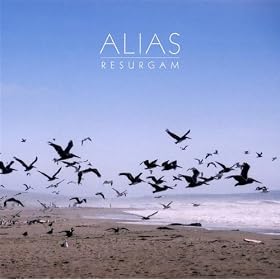
Alias: <i>Resurgam</i> & <i>Resurgam Residual EP</i> (Anticon CD/CDEP/digital)


Brendon Whitney has always been one to keep on eye on, working in the fringes of hip hop with a knack for sampling, editing and technique that easily could pit him against DJ Shadow or RJD2. But his aesthetic is not quite the same as either of those once-comparable artists (their respective sounds have veered sharply apart as well)... Alias has always been more of a composer, less a compositor, if that makes sense. Even as his music is comprised of layers upon layers of samples and sounds and loops, it's always felt more deliberate, and it usually sounds like he's created many of these sounds himself. He also now seems to create a lot of the electronics found on his tracks, not content to lift someone else's synth patterns or basslines. A lot of this lush layering has veered his sound away from hip hop into something more sublime and lush.... when he stopped rapping on his own records, it sealed the deal that Alias was about a lot more than leftfield hip hop.

After several collaborative releases in the past few years, he's returned to his solo work with Resurgam, which might just be his crowning achievement so far. It's remarkable in the sense that it doesn't break too much ground for anyone exposed to his previous repertoire, but for lack of more eloquent words, he just fucking nails it. Resurgam seems to rely on samples the least of any of his material that I've heard. As a technician he's near-perfect here, flaunting his skills with beat programming through aptly named tracks like "I Heart Drum Machines" and "Justamachine," but the skill that went into the construction of these tracks, as with most tracks on here, is runner-up to the emotional beauty to be heard. Many of these tracks are brimming with sounds, often crossing over into other areas like the blurry-eyed swoon of downtempo IDM (think Boards of Canada or Arovane) or dreamy shoegazer pop. Even while there are melancholy moments to be found (such as the more reflective title track), many of these tracks have an optimistic undertone in their unabashed major keys, beaming, hazy refrains and electro-acoustic arrangements. The pacing is dead-on here, usually alternating his more complete tunes with short, ambient interludes – this is nothing that hasn't been done before, but here it works especially well in pacing the album. Vocal contributions from Yoni Wolf of Why? and The One A.M. Radio break things up nicely as well. With the swirling end track, "Oakland In The Rearview," one can only consider this Alias's dedication to his former homebase, having recently left northern California for his original birthplace, Portland, Maine. With a title that translates roughly into "I shall rise again," it seems only fitting that this music be at once reflective and aspirational.

So what of its accompanying EP? It was released in an extremely limited quantity of 100 copies for those who pre-ordered the album through Anticon's webshop. That said, it's not hard to find it floating around online... *ahem* It's a different approach than the main album, in that Alias's voice is at the foreground for the first time since his early albums. But he's not really rapping here; with the exception of the catchy first track, "The Answer," in which he repeats the phrase "I don't wanna be a rapper," channeling the monotone musicality of fellow Anticon artist Doseone, on a few of these tracks Whitney is singing most earnestly. He doesn't have the best voice, but you get the impression that due to the highly limited nature of this EP, these were really personal tracks for him and those fortunate enough to listen in are in on his secret. The production is again top-notch, working as a sister to the main album beautifully... the more outright emotive quality of some of the vocal tracks as well the extension of the same lush, inspired arrangements of the album give this a slightly different flavor within the same broad stroke of Alias's craftsmanship.

Certainly one for the best of 2008, Regurgam comes highly, highly recommended!

mp3s: I Heart Drum Machines | Oakland In The Rearview | The Answer
more info: Myspace | Anticon
buy it: Anticon Store | Bent Crayon | Boomkat | Emusic | Amazon mp3

Monday, October 6, 2008

I do reckon

Microfilm remixed Radiohead's new contest single, "Reckoner," which is currently online for voting. We're pleased with the results and hope you are too. Please vote for us if you like it!!