Saturday, March 15, 2008

No Kids: <i>Come Into My House</i> (Tomlab CD)


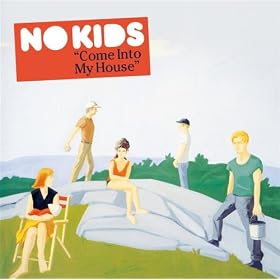
Vancouver-based No Kids evolved out of the ashes of indie-pop group P:ano after one member parted company. The best description of the somewhat varied music to be heard on Come Into My House is that it sounds like a primarily acoustic, chamber instrument band taking a stab at various pop genres, including vaguely R&B songs, upbeat pop tunes, lazy ballads and everything in between.

Things start off unassumingly enough with the sedate "Great Escape," a light ballad that evolves midway to introduce a lovely brass and string arrangement. The proceedings are a bit more upbeat, with both "For Halloween" and "I Love the Weekend" introducing more elaborate arrangements with an emphasis on rousing vocal choruses and rhythm sections that seem to include a little bit of everything. A distinct R&B influence is more obvious on the likes of "The Beaches All Closed" and "Bluster In The Air" which are both airy but solid; these are some of my favorites. The first thing I had heard about No Kids was that they are chamber-music-meets-R&B, but it's only really on these 2 tracks that it comes through. I wouldn't necessarily say that on the whole it's a very accurate description of the band's music.

Some of the band's slightly goofier moments don't work for me. "Four Freshmen Locked Out" seems like a cheeky novelty, and in its position in the very center of the album, it seems to undermine the better tracks of the album a little. If nothing else, though, the trio aren't afraid to show that they have a sense of humor and that they don't take themselves too seriously. It's this shift in mood from a song like this to the more glum "Dancing in the Stacks" that can make Come Into My House a somewhat confounding listening experience, but the fact that they are able to keep listeners on their toes is probably not so bad a thing in my opinion.

In the end, it's not the potential novelty of genre crossover that makes No Kids successful for me, but rather their knack for interesting songs and smart arrangements, incorporating a variety of different chamber instruments, percussion and minimal electronics to craft rich, thoughtful tracks.

mp3s: The Beaches All Closed | For Halloween
more information: Tomlab | Myspace
buy it: Forced Exposure | Boomkat | Amazon | Emusic | iTunes

Wednesday, March 12, 2008

Kelley Polar: <i>I Need You to Hold On While the Sky Is Falling</i> (Environ CD)


Kelley Polar has a fantastic history for write-ups like this one. He's the brother of another established electronic artist (Blevin Blechdom), is the Croatian-born son of U.S. diplomats, was a musical prodigy at a very young age, studied music at Juilliard (but was expelled), did the string arrangements that made Metro Area's backcatalogue so lush, and released a handful of records with his fellow string performers as the Kelley Polar Quartet. It's confusing then that his debut in 2005, the über-slick Love Songs of the Hanging Gardens, got so completely overshadowed by the likes of Junior Boys or early Hot Chip, artists flirting with the same musical stew of R&B, house, disco and new wave pop, especially considering that as a self-contained musical force, Polar is superior to his contemporaries, wearing several hats as primary songwriter, producer and vocalist as well as being responsible for all the string arrangements (and playing the viola) on nearly every track.

His second album is more confident in its blending of styles, moods and sounds. There are moments where he adds in a Laurie Anderson-esque vocal tribute, but never is it stronger than on the first track with its curious vocoder repetition of prosaic phrases (repeated nearly a capella, until a beat is introduced, in an odd phrasing which usually requires a rapid-fire repetition 5 times over of each phrase). The baton is passed from this vocal bit to a simply gorgeous combination of lush Detroit techno and disco strings. Elsewhere, "We Live in an Expanding Universe" also gives a nod to Anderson's "O Superman" with its haunting staccato vocal chords, before evolving into a lovely new wave pop song. More R&B-tinged are tracks like "Sea of Sine Waves," characterized by a bulbous bassline, fluttery backing vocal pattern and fat analog synth lines, or the breathy "Chrysanthemum" which has a super hot 70s R&B unison chorus (it makes me think of Ramp, for some reason). There are also the full-on pop workouts of "Entropy Reigns" and "Satellites," the former of which is as close as you'll probably get to the best track the Human League never recorded.

But what's most fresh about this album is not its references to the music of the past, but the music of the present and future. "Zeno of Elea" is an oddball true original, consisting of a narrative vocal and a weird arpeggiated synth line. "A Dream In Three Parts (On Themes By Enesco)" is presumably building upon musical themes by Romanian composer Georges Enesco (although I'm not familiar with his repertoire), with a fantastic, otherworldly quality to the various pieces and parts, generally beatless, sprinkled with synths and layered with string arrangements. And closing tracks "Thurston and Grisha" and "In Paradisum" seal the deal with more unusual arrangements, the latter consisting of a swirling amalgam of pitter-patter snare rushes, noodly portamento synths and swelling vocals. These tracks break the mold of the fusion-pop style that might those Junior Boys or Hot Chip comparisons, and their placement throughout the album helps keep things from feeling too repetitive.

It's a hot album that hopefully will bring Polar the broader praise he deserves, both very much here and now in its blending of styles, but also forward (and backward) looking in its combination of unique arrangements, curious ideas and tip-top production.

mp3s: A Feeling of the All-Thing | Chrysanthemum
more information: Environ | Official site | Myspace
buy it: Boomkat | Emusic | Amazon | iTunes

Tuesday, March 11, 2008

Big Spring Sale: <i>After Dark + Blueprints</i>


As one half of Microfilm, I'd like to sincerely thank anyone who's supported our musical endeavors by ordering our 2xCD set online, or by purchasing online or through an actual shop. We have boxes and boxes of CDs in our studio, and have decided to slash the price dramatically. You can now order the complete set for $6, plus shipping. This package contains the complete After Dark 2006 album, remastered, with 2 extra remixes previously found on the Young Adult Fiction internet-only release. It also includes a complete extra disc of remixes called Blueprints which includes production from Infantjoy, Lee Chameleon, Monologic, Frenchbloke, Warmdesk, Kero and more. You can only order it at this price through our web site, so check it out:

Order the After Dark + Blueprints 2xCD set from Microfilm directly

If you prefer to order it online in a digital format, you have a few different options:

iTunes: After Dark | Blueprints
Emusic: After Dark | Blueprints
Amazon: After Dark

We have a new album in the works with a proposed late summer/early fall release. I'll keep you posted. ;-)

Beirut: <i>The Flying Club Cup</i> (Ba Da Bing/4AD CD)


Zach Condon's music as Beirut inhabits the same fantastical territory of other fringe indie-pop acts such as Bright Eyes, Patrick Wolf or Final Fantasy, characterized by earnest songwriting and a penchant for odd, often elaborate arrangements. Bright Eyes tends to be a little more spastic and dramatic (not to mention more rock, at times even moving into alt-country twang) while the latter two have their own spins on chamber music arrangements. The FF correlation in this instance is hardly inappropriate, as Owen Pallett is responsible for many of the lush arrangements to be found on The Flying Club Cup (in addition to playing and singing). But whereas Patrick Wolf seems to have his ear to the ground in terms of what's happening in new pop and electronic music, Condon seems utterly unconcerned, and harks further back in time with arrangements that are just as informed by the music of now with the sounds of ages long past.

Condon's voice carries most of the songs with a light, lovely sound that can sometimes be affected by a heavy vibrato -- however, this doesn't get in the way of the songs or the stories he tells. Most notable are the instrumental arrangements, which combine a wide array of instruments and styles. The cornerstones of the album are to be found in the generous use of accordion, militaristic snares, trumpet, piano and strings, more often than not set to a 3/4 waltz time signature. And whether a song is more understated like "Un Dernier Verre" or more elaborate like "Cherbourg" or the Pallett-fronted "Cliquot," Condon and his troupe bring the drama, often with what could be considered a 19th century vantage point, equally conjuring up mental associations with the French Riviera or the American Civil War. It is important for me to stress that from my own personal point of view, these are likely cliches that I bring to the experience, as I have no thorough knowledge of the music of this time period. Condon's own fascination with the music of olde is both what makes Beirut's sound unique in 2008 but also what runs the risk of trivializing it, making it seem more of a novelty at times. Fortunately, Condon's knack for a good song generally trumps any of the colonialism of his history-mining; as a result, The Flying Club Cup succeeds not only in the face of its own fascinations but also because of them.

With The Flying Club Cup, Beirut's music snugly sits just in between appropriation, musical theater, and clever singer-songwriter earnestness, balancing each of these loose categories with what appears to be relative ease. Because of that, I can't emphasize enough just how much I enjoy this album. It's sweet, dramatic, fun, tender and lovely, all at once.

mp3s: Cliquot | In The Mausoleum
more information: Official site | Myspace | Ba Da Bing Records | 4AD
buy it: Bent Crayon | Boomkat | Amazon | Emusic | iTunes

Monday, March 10, 2008

<i>21 Love Songs: A Tribute to the Magnetic Fields</i> is available NOW


Microfilm participated in a free tribute compilation to the music of The Magnetic Fields. 21 Love Songs features a variety of radically different versions of songs spanning Stephin Merritt's entire career, some leaning toward a more DIY free-folk sound or, in our case, slick, clean electro-pop. Artists contributing include Secret Owl Society, Evripidis And His Tragedies, Monica Y Carlos, and many more.

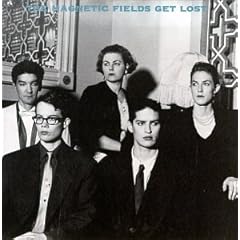
You can download the whole thing here. For purposes of contrast I've included our contribution as well as the original version... the track we picked was from 1995's Get Lost album, the fantastic synth-pop song "The Desperate Things You Made Me Do."

Download: The Magnetic Fields: "The Desperate Things You Made Me Do"
Download: Microfilm: "The Desperate Things You Made Me Do"

Get the whole album here

Sunday, March 9, 2008

Autechre: <i>Quaristice</i> (Warp CD)


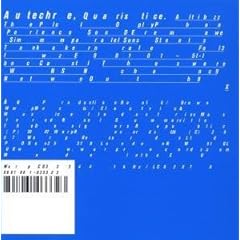
Rob Brown and Sean Booth, the two guys behind Autechre, are heroes of mine. Ever since their early days of Artificial Intelligence-era melodic post-techno, they've been on the vanguard of electronic listening music. They are by and large wholly responsible for the genre mis-labeled "IDM" (through no fault of their own), which spawned a surge of sound-alikes after the release of their late 90s opuses Tri Repetae++ and Chiastic Slide. The combination of broken beats, heavily manipulated electronic sounds, melancholy but gorgeous melodies, and new and innovative production techniques was incredibly fresh in the mid to late 90s, but by the time the earlier part of the next decade rolled in, melodic IDM albums were a dime a dozen. Autechre moved away from this blueprint progressively with each subsequent release, never sounding the same as those aping their style... but at what cost to listening enjoyment? An album like Confield from 2001 may be clever and academic and may indeed dodge expectations, but it's a bear to sit through sometimes. The subsequent Draft 7.30 was a little less impenetrable but still not overly resonant (despite a few standouts), and their 2004 release Untilted seemed to run on autopilot. It seemed as if they had exhausted their process-based approach and were lingering at its logical conclusion.

So it's with great pleasure that I give their newest effort Quaristice play after play, rekindling my own personal romance with their music. The magic is back, and Quaristice's 20 tracks are more than enough to prove it. What's perhaps most immediately gratifying about the album is its playfulness; there's a sense of spontaneity in here, even as the tracks themselves were probably worked over with a heavy hand in the final hour. The obtuse, weird sounds the pair have become notorious for are still present in abundance, but they way they interact with other pieces and parts makes this music feel effortless and, even in its most discordant moments, approachable. From the breezy opening chords of "Altibzz," it's obvious that this release is already more palatable than Untilted, although it's a bit of a red herring in light of the wild ride that ensues over the following hour. "The Plc" has a twitchy electro-tinged shimmy about it, "IO" has a confusing, squiggly jitter offset by affected vocal samples, while "Perlence" is anchored by a spacious drum loop, even as the melodic elements surrounding it grow progressively more impatient and prodding. Booth and Brown are smart in the use of pacing and dynamics throughout Quaristice, peppering more ambient tracks like "SonDEremawe" and "paralel Suns" between more severe things like the swirling "Fol3" or the stammering "plyPhon." The final two tracks are an extended ambient denouement, a beatless freefall that's near perfection in placement and tone. Still, what is perhaps most rewarding is the occasional nod to the project's melodic past, such as the majestic "Theswere" or the Rephlex-esque "chenc9." It is because all of these aesthetics co-exist and complement one another from track to track that Quaristice really excels.

Autechre haven't compromised much here, but their willingness to migrate from style to style rather than being more uniform this time around makes Quaristice feel like a much broader, expansive effort. It's a healthy reminder of why they earned their reputation in the first place.

mp3s: The Plc | Outh9X
more information: Autechre.ws | Myspace | Warp Records
buy it: Bent Crayon | Forced Exposure | Boomkat | Amazon | iTunes

Saturday, March 8, 2008

Various Artists: <i>200</i> (Planet Mu 2xCD)


It is difficult for me to not associate Planet Mu as a label with boss Mike Paradinas's Mu-Ziq project; after all, the label is named after it, and generally speaking the two have always been complementary in terms of creative vision. So when µ-Ziq's drill & bass aesthetic seemed to fade from the foreground, I lost a bit of interest in the label, and the inevitable trend-hopping that persists in electronic music didn't necessarily always leave a lot of room for Paradinas's tried and true dedication to his own cause. But more power to him, because in 2008 the label celebrates its 200th release, and can stand proud for having weathered the storm and brought the noise with no regrets.

With the emergence of Burial's debut on the Hyperdub imprint in 2006, the dubstep genre really grew significant legs beyond its insular UK club scene, and Planet µ earned a well-deserved boost as one of the central hubs of dubstep and its various permutations, most often veering into something more sinister, spastic or melodic, crossing over into IDM, hardcore and drum & bass. What 200 does spectacularly well is serve as a showcase of all of these various aspects of the Planet µ roster and more.

For starters, it's a two-disc set and is priced at a mere $10, a total steal for the especially high level of quality control to be found herein. From the opening notes of Ceephax's downright jolly "Castilian" to the deeeep dub of MRK1's "Sensi Skank," it's a pretty top notch collection of tracks, culled from both the label's backcatalogue (several tracks previously only available on vinyl) as well as unreleased treasures.

The easiest way to describe some of what's on here is to break it into loose categories. There are the deep dub-infused sounds of MRK1, Distance (whose "Fallen" appears here as remixed by Vex'd, really stellar stuff), Pinch, Darqwan and Boxcutter (whose "Good You Dub" is a real standout). A few of the tracks veer more into the classic IDM sound: iTAL tEK's "White Mark" is wonderfully gloomy, µ-Ziq's "Lexicon" is delightful and melodic, recalling some of Orbital's more memorable tunes, and The Doubtful Guest's "Nannita" is unusual in its blending of operatic vocals and electro stylings. Some tracks are even more leftfield, namely Jo Apps' "Kausikan," a weird off-kilter downtempo track, The Gasman's oddly beatless arpeggio noodler, "Equino," Ambulance's woozy "The Tams" which closes disc one, and Julian Fane's "The Moon Is Gone," the most proper pop song here, complete with Thom Yorke-esque falsetto voice and a more full arrangement. But for fans of the label, certainly the most immediate tracks will be the crazy, frenetic hardcore and drill & bass tracks that seem somehow to best characterize the personality of the label in its several years of existence. Venetian Snares' "Devil's Totem" could be considered the culmination of the spazzy sequencing experiments of µ-Ziq, Squarepusher and Richard Devine all rolled together, only darker. FFF's "The Feeling" is the tasty essence of every overwrought Speed Limit 140+ BPM throwaway you ever secretly loved, and Shitmat's "Shut Up" (remixed here by Hellfish) is a total monster of noise and furious speed. The funniest track is Duran Duran Duran's "Face Blast" which combines electro, booty bass, mash ups and a good amount of humor into a dancefloor slammer. The only tracks that fall a bit flat for me are Parson's "Throw Some Ds" – it's got more of a hip hop vibe but plods along a bit aimlessly – and Bizzy B & Equinox's "Merda Style 2004" is a little too breaks-by-numbers for my liking.

All in all, 200 is a fantastic way to sample the Planet µ label's repertoire, past, present, and future, and seals the deal that not only is the label here to stay, but it's a consistent innovator in the often splintered landscape of leftfield electronic music.

mp3s: Ceephax: Castilian | Ambulance: The Tams
more information: Planet Mu
buy it: Bent Crayon | Boomkat | Amazon | iTunes | Emusic

Tuesday, March 4, 2008

Modeselektor: <i>Happy Birthday!</i> (BPitch Control CD)


Modeselektor are one of my favorite electronic acts of the past several years. Their quality control is generally quite high and they are supremely versatile, trying their hand at various aspects of electronic music without ever pandering to many cliches or allowing themselves to be painted into any musical corner. After a series of diverse and successful 12" releases which ran the gamut from "serious" IDM to full-on rave tracks, Modeselektor released the wildly surprising & delightful Hello Mom! album in 2006. It was a wallop of an album in that it combined everything the pair does so well, and expanded upon it further. It included references to hip hop, electro, hardcore, IDM, grime and more, without ever seeming too scattered or fragmented.

So it happens that if Happy Birthday! somehow feels slightly underwhelming, it's only in the fact that it's not as surprising as the debut full-length. It's not any less successful, or less diverse, and still seems to smartly reflect their various interests musically, but just in that sheer "wow" factor it's a case of diminishing returns.

With that small point of criticism out of the way, I have to admit that it's a pretty killer album. They've reprised the TTC collaboration from their debut with another here called "2000007," which is just as hot and fucked-up as the last go-round, as well as other vocal contributions from Puppetmastaz (the humorous "Dark Side of the Frog/Sun"), Maximo Park and Schematic noisemaker Otto Von Schirach (another humorous tune, "Hyper Hyper" is a shout-out to all things hi-nrg). Two of my personal favorites are collaborations with Radiohead frontman Thom Yorke ("The White Flash" has all the strength that The Eraser aspired to) and Tikiman Paul St. Hillaire, whose "Let Your Love Grow" collaboration with the duo and Apparat (credited to their previously one-off Moderat alias) absolutely soars in its combination of surging chords, dub beat and vocal.

But most of this album is Modeselektor on their own, making a variety of sweet instrumentals that crossover between electronic subgenres and back again, often effortlessly and many times within one track. "Edgar" has a great grime rhythm track over an aspirational melodic workout, while "Godspeed" is a fantastic crescendo of a track, working in tandem with the goofy title track to kick off the album with a bolt of energy. "B.M.I." has all the dark crunch of a good Sleeparchive track (his remix from their debut must have rubbed off) while "The Black Block" is probably the most direct dancefloor banger to be found.

While Happy Birthday! might not have quite the same element of surprise that characterized Modeselektor's first album, it's still quite strong and showcases their wide variety of interests, influences and talents.

mp3s: Godspeed | Let Your Love Grow
more information: BPitch Control | Official Site | Myspace
buy it: Forced Exposure | Boomkat | iTunes | Emusic | Amazon

Monday, March 3, 2008

Pan Sonic: <i>Katodivaihe</i> (Blast First Petite CD)


What's up with all this music that came out in May 2007 that I apparently missed? This is one of a string that I've written about recently that must have flown under my proverbial radar. Not that Pan Sonic are anything new to me, as I've been a fan of theirs since the late 90s when they started mutating from a post-techno trio into something progressively more unique and abstract. However, I haven't followed them too much in years past, with the exception of the somewhat bloated 4xCD set Kesto from 2005 (which, admittedly, I didn't listen to more than once in its entirety).

The impulse to hear new material from my favorite musical Finns came when I was writing about Signal last week, whose music is very much cut from the same cloth. Mika Vainio and Ilpo Vaisänen after more than 10 years are still exploring the outer limits of minimal electronic music, usually combining instruments of their own creation with sequencers and samplers, and recording and assembling their music through live improvisations. While their latest full-length Katodivaihe is not a shocking development from their previous repertoire, it is enough of a shift in sound to be quite interesting, and after the excess of Kesto, it feels like a much more concise musical concept from start to finish (and able to listened to in one sitting!).

If there is a theme to be found here, it's that of abrasion and discomfort. Much more so than some of their past efforts, Katodivaihe is unafraid to emphasize noise, with several of the tracks bringing to the fore caustic, destructive rhythms that once again reveal Vainio's ties to industrial music in the past. After a more low-key opener that is more typical of the duo, "Lähetys" brings the noise in the form of mangled, distorted explosions, while "Koneistaja" is grounded with a more common drum track which provides the backbone of a wall of grinding noise over it. This is not to say that Katodivaihe is lacking in dynamics; there are several tracks that showcase the pair's ability to create chilling atmospheres, such as the icy, spacious "Laptevinmeri" or the mindfuck double-whammy of "Suhteellinen" and "Kytkennät," both of which play with extreme dynamics. "Suhteellinen" begins as an ambient exploration of cello overtones but explodes in its final moments in a sprawl of highly abrasive electronic noise, and "Kytkennät" picks up where the former leaves off with a strange undulating pattern of noise and pulse. They save the best for last, though, with several tracks in a row that focus on the most unabashedly furious and rhythmic aspects of the group's aesthetic, my favorite is which is "Leikkuri," a short but wicked track that feels more like Merzbow remixed than a proper Pan Sonic composition.

It's refreshing to hear the originators of this aesthetic still running strong and evolving in interesting ways, while staying true to their roots.

mp3s: Suhteellinen | Leikkuri
more information: Official site (Phinnweb) | Blast First Petite
buy it: Forced Exposure | Boomkat | Amazon

Sunday, March 2, 2008

Milanese: <i>Adapt</i> (Planet &#181; CD)


Steve Milanese is capable of an awfully ferocious slab of sound. His Extend album was chock full of distortion, mangled sounds, frenetic breaks and weird cut-up vocals, resulting in one of last year's more memorable (and scathing) dubstep albums. It's only fitting that after his cut-up, boisterous debut 1 Up Milanese jumped from Warp Records to µ-Ziq's Planet µ imprint; Mike Paradinas (µ-Ziq) has been focused on harnessing the collective power of the fast and the furious for many years, with a notable gap between the en vogue days of drum & bass and its various niche offshoots (Squarepusher, et al) to the renewed interest in the power of the distorted break (circa Burial's debut). So the aggressive bombast of Milanese's Extend seemed right at home alongside the likes of MRK1, Vex'd and other µ artists.

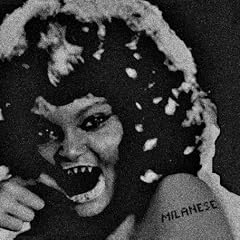
Perhaps what makes Milanese's releases so appealing is that they never overstay their welcome. 1 Up was a mini-album with a plenty of legroom within its noise, never prone to resting squarely within one specific aspect of dubstep or broken beat. Extend appropriately enough expanded a bit with 10 tracks, a few of which were shorter with a run-time totaling under 40 minutes. And in the middle of last year, Milanese released this collection of remixes and rarities, Adapt, which interestingly culls from both of his previous albums, not just one. Extend is represented more substantially, with a primary focus on the vocal and more direct beat-driven tracks, but Adapt lacks one thing that was really appealing about that release, which is its willingness to forego the drum track altogether and to opt for more sculptural, dense noise. It generally makes up for it, however, in its keen ear for rhythm.

Milanese contributes a couple reworkings of his own, including the alternate of "Mr. Bad News," here titled "Mr. Good News," as well as another remix of the track from Chris Clark, who turns it into something far more impressive, playing up the melodic phrase that formerly was limited to a low-end snarl, but still laying on plenty of grit with furious breaks and drum programming. Distance's remix of "Dead Man Walking" turns down some of the distortion and distills it into something that feels a little less brutal, easier to digest; similarly, Milanese does his own dub of "Barry" from Extend which again peels back one layer of the frantic chaos that shaped the original, but it still relies heavily on the repetitive I, Robot sample ("I did not murder him...") and distorted, albeit slower, drums.

My favorite de/reconstruction comes from Hrdvision... his reworking of "Sight Beyond Sight" is super clipped, cut-up, reorganized and revitalized. The original was a brutal, thudding assault of breaks and atmospherics, leaning more toward the pulverizing hardstep of late 90s Panacea than anything one might associate with the current dubstep scene. Hrdvision's interpretation dissects the source audio and makes it something new, even as many of the samples sound like they were sourced from the final bounced track (just fragmented and reorganized). As it progresses things mutate and he introduces some unusual synth patterns as well as additional drill & bass breakbeat loops, making the second half of the mix almost its own track completely, but one of the most interesting portions of Adapt on the whole. The other remixes that appear from 1 Up also also enjoyable, especially the "Billy Electron" track which revisits "Billy Hologram" and makes it something less rough around the edges.

It's not essential listening, but is an interesting complement to the previous two releases in Milanese's repertoire. For newcomers, I'd recommend Extend over this, which is better heard first if only to appreciate the new direction of some of these remixes, but also has more to it in terms of variety and raw power. That said, it's a welcome stopgap until we hear more original material from Mr. Milanese.

mp3s: Sight Beyond Sight (Hrdvision Remix) | Mr. Bad News (Clark Remix)
more information: Planet µ | Official site | Myspace
buy it: Bleep | Boomkat | Forced Exposure | Amazon | Emusic | iTunes

Saturday, March 1, 2008

September Collective: <i>All The Birds Were Anarchists</i> (Mosz CD)


September Collective is a three-piece group consisting of otherwise accomplished artists Robert Lippok (probably best known as 1/3 of To Rococo Rot), Barbara Morgenstern and Paul Wirkus. The trio came together after playing shows together as solo acts, and it's neither surprising that they were billed together nor that they decided to unite for a new project together.

Although these musicians' own music is relatively distinct when compared to one another, they do tend to mill about the same territory. Each is good at creating sounds that are both sedate and calm but active and interesting, using subtle laptop textures and rhythm tracks alongside melodic chords and a smart use of repetition to create an atmosphere or mood. Morgenstern is the most pop-minded of the three, always working with her own voice as well as a substantial use of organ and piano to create more immediate songs rather than moods. In this project, her role is more democratic; she doesn't sing but contributes a variety of playing here, most obviously in the form of the piano that graces some of the more memorable tracks.

It's funny how art direction and a title can steer your impression of an album; this album brims with an organic, natural quality, despite all the editing, sampling and electronics that went into its production. Perhaps that is because there is a certain spontaneity to some of these tracks; it sounds as if they evolved out of improvisation and some of the happiest accidents were captured in the process. At times this improvisation is more obvious, such as the relatively freeform, effects-laden short track "Our Cat," or the strange, creaky excursion that is "Pausenband." At other times, things feel more deliberately crafted, with a more keen ear for musicality and less emphasis on texture. The longest track, "Das Meer," has a bouyant, muted bassline that provides a gracious counterpoint to Morgenstern's piano playing; it all has a bit of a jazzy slant without sounding sentimental or cloying. "Grundgeraeusch Der Wohnung" is the best of both worlds, both abstract and melodic, bridging the various gaps between each artist's aesthetic.

It's an album that floats by almost like a dream, but it's full of moments that are memorable. The rickety attack of "Primaten" or the wobbly nod of "Natura" are just a couple of the things that make me smile when the album plays, and makes me eager for the bloom of spring.

mp3s: Natura | Spaetes Licht
more information: Mosz Records | Myspace
buy it: Forced Exposure | Boomkat | Emusic | iTunes | Amazon